
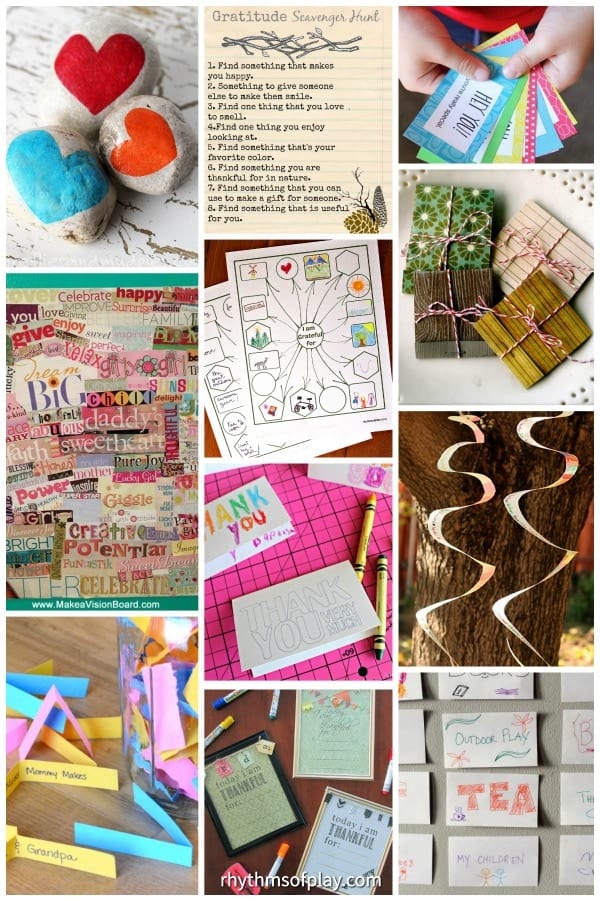
Here’s a collection of gratitude activities for kids and adults that provide a simple way to cultivate gratitude at home or in the classroom. Below, you will find lessons in gratitude, thankful activities, thankful games, and gratitude crafts to teach children about gratitude and help adults increase feelings of thankfulness.
Gratitude activities and crafts for kids (and adults) offer a fun and easy way to cultivate an “attitude of gratitude” in the home or classroom. Gratitude brings abundance. When we are grateful for what we have, we get more of what we are thankful for. Simple, but true. When we teach and model gratitude to our children, they can find greater happiness in life. Gratitude activities are commonly done after the Fall Equinox as a part of seasonal celebrations, family Thanksgiving Traditions, and throughout Christmas and the holiday season. However, this list of creative gratitude activity ideas can be enjoyed any time of year by children and adults.
Please scroll down to discover a fun round-up of gratitude activities for kids. The ideas included in this extensive guide to gratitude cover what gratitude is, why it matters, how to teach children gratitude, games that teach gratitude, and gratitude crafts to help children learn to think thankful thoughts, express appreciation, and build their gratitude muscles. Most of the activity ideas and crafts included in this comprehensive gratitude activity guide are also perfect for helping adults increase feelings of gratitude. First published on August 9, 2016, this informative article describes several gratitude activity ideas to boost thankful feelings at home or in the classroom. It is regularly updated to enhance the content and stay current.
You will notice that a few of these gratitude activities and crafts mention Thanksgiving and the holidays. However, none of them are specific to the Thanksgiving holiday. In other words, if you are looking for thankful activities with a festive Thanksgiving Turkey or feathers explicitly designed for the Thanksgiving holiday, pop over to look at this fun list of Thanksgiving gratitude activities and crafts!
What is gratitude or Thankfulness?
Gratitude and thankfulness are potent emotions that can alter negative attitudes to positive ones and profoundly enrich our lives. At its core, gratitude is a form of mindfulness that enables us to be present with our positive feelings, recognize the good things that happen, and appreciate the positive aspects of our lives, from simple pleasures to the most important people and events.
In other words, gratitude and grateful thinking involve expressing appreciation for the blessings in our lives, rather than being fixated on the negative aspects of what we do not have. It is a positive emotion and a mindset of appreciating and being thankful for the good things in one’s life.
But thankfulness and gratitude go way beyond simply saying “thank you.” It’s a genuine acknowledgment of the value that people, experiences, and even challenges bring to our journey. This involves recognizing the kindness and support of others, acknowledging the value something or someone brings to our lives, fully appreciating our positive experiences, and looking for the positive outcomes of negative experiences with gratitude for lessons learned.
“When we are thankful for the blessings in our lives, we will recieve more of what we are grateful for and find greater happiness in life.”
Nell Regan Kartychok
Why is gratitude important?
Gratitude is an essential and powerful emotion that benefits individuals and their relationships. By cultivating a grateful mindset and regularly practicing gratitude, we can enhance our well-being, foster positive connections with others, and lead more fulfilling lives. Gratitude is associated with increased levels of optimism and empathy, as it shifts the focus from what is lacking to what is present, promoting a positive outlook on life. Being thankful helps individuals appreciate the simple pleasures and joys in their daily experiences.
Feeling grateful can reduce stress, anxiety, and depression while promoting positive emotions and resilience. By focusing more on the people, events, places, and things we are thankful for, we can cultivate a habit of gratitude and fulfillment.
Gratitude is a powerful reminder of the blessings and support we receive, and this thankfulness leads us to a more fulfilling and contented existence. When we practice gratitude and thankfulness becomes a way of being, we have a deeper appreciation for everything in our lives.
Grateful individuals tend to be more positive, resilient, and empathetic, which fosters a more harmonious and supportive social environment. They also tend to be more resilient in the face of adversity. Recognizing the positive aspects of life can provide a buffer against negative emotions during difficult times.
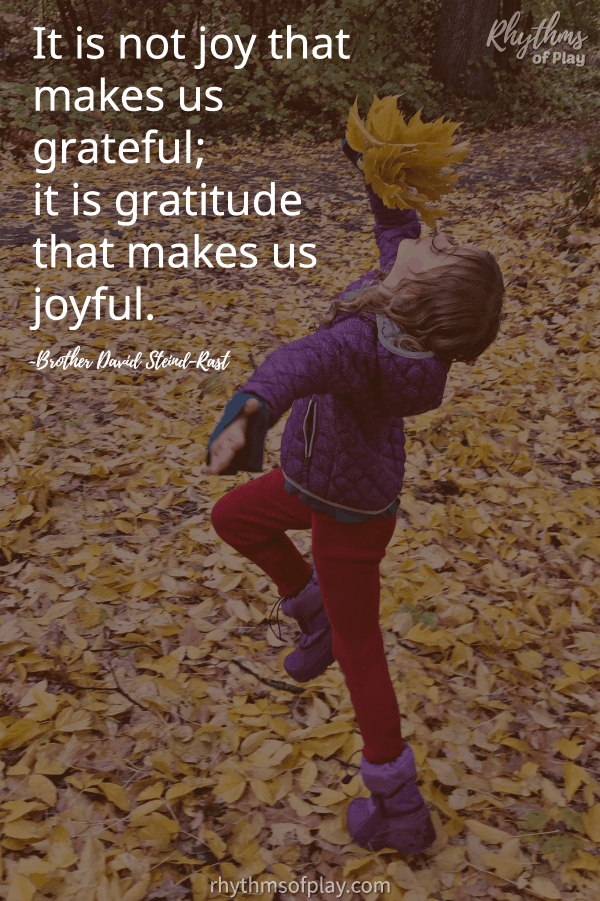
The fun gratitude crafts and activities on the list below can help children and adults establish the habit of paying attention to the good things in life. By cultivating gratitude, we can experience enhanced psychological well-being, better physical health, improved relationships, and several other benefits. Just look at how happy my daughter is in the photograph below.
How can you teach children about gratitude?
Teaching kids about gratitude is essential to their emotional and social development. Use the kids’ gratitude activities below to help you get started. Gratitude helps children appreciate what they have, fosters empathy, and promotes positive relationships. Fostering a grateful attitude can significantly impact children’s quality of life and the level of happiness they can experience. You might also enjoy these gratitude prompts.
Below is a list of ten easy ways to teach kids about gratitude. By instilling these practices, we can nurture a sense of contentment, empathy, and kindness in children, empowering them to lead more fulfilling and compassionate lives. After reading them, scroll to the next section for several thankful activity ideas.
1. Lead by example:
- Children learn by observing the behavior of adults and caregivers, so do your best to model thankfulness and a grateful attitude.
- Demonstrate gratitude in your everyday life by expressing thanks and appreciation for what you have. Show your appreciation for the kindness you receive from others to the little ones in your life.
2. Count blessings:
- Encourage children to take a moment to stop and count their blessings when good things happen in their lives.
- Or invite them to list three things they are grateful for each day.
- These practices will help them focus on the positive aspects of their lives as opposed to the negative aspects.
3. Say “Thank You”:
- Encourage children to say “thank you” when someone does something kind for them, such as giving them a gift, helping them with a task, or even sharing a toy.
- Because young children learn best by watching and imitating others, parents and caregivers can demonstrate gracious behavior, good manners, and the importance of saying thank you, rather than lecturing them on what they haven’t yet learned to do for themselves.
- Learn more HERE–> How to Teach Kids Good Manners the Easy Way.
4. Avoid comparisons:
- Teach children not to compare what they have (or don’t have) with others.
- Instead, encourage them to focus on joy and appreciation for the unique blessings they are fortunate to have in their lives.
5. Encourage random acts of kindness:
- Engage children in acts of kindness for others. A few simple ways you can do this are included on the list below:
- Make a thank-you card for a friend.
- Help a family member or teacher with chores.
- Share your toys with others.
- Bake cookies for a neighbor, grandparent, teacher, or service worker.
- Smile at a passerby and say good morning, hello, good afternoon, or good evening.
- Ask someone if there is anything you can do for them.
- Pay a favor forward.
- Offer assistance when you can instead of watching people struggle on their own.
6. Donate and volunteer:
- Involve children in charitable activities, such as donating toys, clothes, or food to those in need, or participating in community service events.
- Donating and volunteering can help children understand the value and experience of giving and receiving empathy.
7. Share gratitude:
- During family meals or bedtime, take a moment to share and express gratitude with one another.
- Have a gratitude circle where each classmate or family member shares something they are thankful for that day.
- Talk about the good things and everything you appreciate about life, and encourage your children or students to do the same.
- Gratitude activities like this foster a sense of connection and appreciation within the family. Scroll down for even more gratitude activity ideas!
8. Start a gratitude journal:
- Introduce the concept of a gratitude journal (or coloring page) to children.
- Invite and encourage children and adults to write or draw things they are thankful for daily.
- This practice can help them reflect on positive experiences, focus on the good things in their lives, and develop a grateful mindset.
9. Share stories of gratitude and thankfulness:
- Read children’s books about gratitude that inspire thankfulness.
- Or tell stories highlighting acts of kindness, compassion, generosity, and gratitude.
- Sharing stories of thankfulness and gratitude, especially about people they know and love, can inspire children to adopt similar attitudes and behaviors.
10. Have compassion and be patient:
- Children might not fully grasp the concept of gratitude immediately, and that is perfectly okay.
- Be patient and continue to gently encourage them to practice gratitude regularly with the thankful activity ideas below.
- Remember, teaching gratitude is an ongoing process. The best way to instill this value in children is to incorporate it into your daily rhythm or routine.
Gratitude Exercises, Activities, and Crafts for Children:
The list of gratitude activities and crafts below can help parents, teachers, and caregivers teach children how to express gratitude in life. Most families and classrooms approach the concept of gratitude and thankfulness at Thanksgiving and around the holidays. However, the gratitude activities and crafts below can help teach children simple lessons on gratitude, friendship, and generosity throughout the year. Scroll down to find preschool gratitude activities, kindergarten gratitude activities, games to teach gratitude, and fun gratitude activities for kids (and adults) of all ages! You might also enjoy these Children’s Gratitude Books that inspire thankfulness.
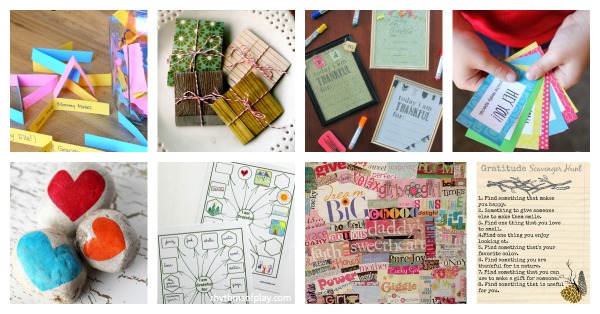
Gratitude Lessons: Lessons in Gratitude for Kids:
Suppose you are looking for a few practical ways to raise a grateful child or want to know how to teach children to be more thankful. The ideas and books below offer valuable insights and helpful parenting tips for raising grateful children in an increasingly entitled world. Use these simple lessons in gratitude, along with the gratitude crafts and activities listed below, to teach kids about gratitude and thankfulness.
- Teaching Gratitude to Children with Gratitude Worksheet for Kids | Sight and Sound Reading
- Raising Grateful Kids in an Entitled World by Kirsten Welch
- The Me, Me, Me Epidemic
 : A Step-by-Step Guide to Raising Capable, Grateful Kids in an Over-Entitled World by Amy McCready
 : A Step-by-Step Guide to Raising Capable, Grateful Kids in an Over-Entitled World by
Related: Encouraging Kindness Towards Nature
8 Gratitude Activities for Kids (Thankful Activities):
Gratitude activities for preschoolers, kindergarteners, and kids of all ages (even the young at heart)! Try any of the fun activities below to nurture an attitude of gratitude in your home or classroom. You will find lots of fun gratitude crafts for kids (and adults) in the next section.
1. Start a Gratitude Journal:
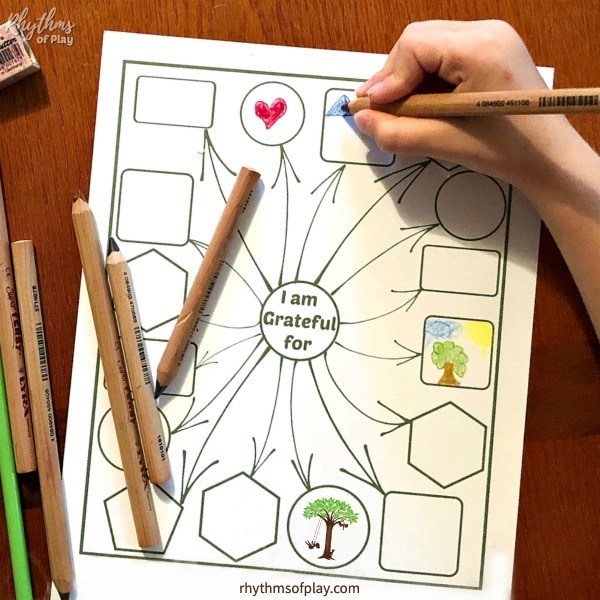
- Download and print the “I Am Grateful for” gratitude journal free printable worksheet. Next, draw or write down what you feel most grateful for in the fun little boxes.
- Start a gratitude journal with “5 Simple Steps to Help Your Child Start a Gratitude Journal.” (By Growing Book by Book for Lasso the Moon.)
- Use printable gratitude journal prompts to help children learn to notice the blessings in their lives through the practice of gratitude journaling.
- Make one of the gratitude journals described in “Thankful Crafts” below, or download and print free printable pages for kids HERE or HERE.
- Gratitude Journal Tip: Use Wet-Erase markers and dry-erase pockets or a laminator and laminating sheets to reuse gratitude journal printables over and over instead of wasting printer ink and paper!
 and
and  or a laminator
 and laminating sheets
 to reuse gratitude journal printables over and over instead of wasting printer ink and paper!
Related: Kids’ Books That Teach Important Life Lessons
2. Make it a Habit to Write “Thank You” Cards and Notes:
- Encourage children to write thank-you notes and cards for those who do nice things for them. Making and sending thank you cards is a fun way to thank loved ones for their generosity and love, and help children cultivate a sense of gratitude.
- To get started, use these simple free printable thank you cards and coloring notes for kids from A Girl and a Glue Gun, or make homemade fingerprint lovebug thank you cards, as shown in the photograph below!

3. Make a Gratitude Wall or Dry Erase Board:
- Create a simple gratitude wall like this gratitude craft and activity from What Do We Do All Day. Feel free to make it your own and embellish it however you wish.
- Or, print out this free, thankful dry-erase board from Bren Did to hang on the wall in a prominent place in your home or classroom. We have ours in the dining room and use it to share what we are grateful for at dinner each night.
4. Use Gratitude Prompts to Draw or Write:
- Help your children understand and feel grateful through creative writing or art with gratitude drawing prompts.
- In other words, use gratitude prompts to help children write or draw what they are most thankful for.
- Try this list of gratitude prompts with a printable.
- Next, invite children to draw their answers onto the “I am Grateful” gratitude journal page!
5. Go on a Gratitude Scavenger Hunt or Thankful Nature Walk:
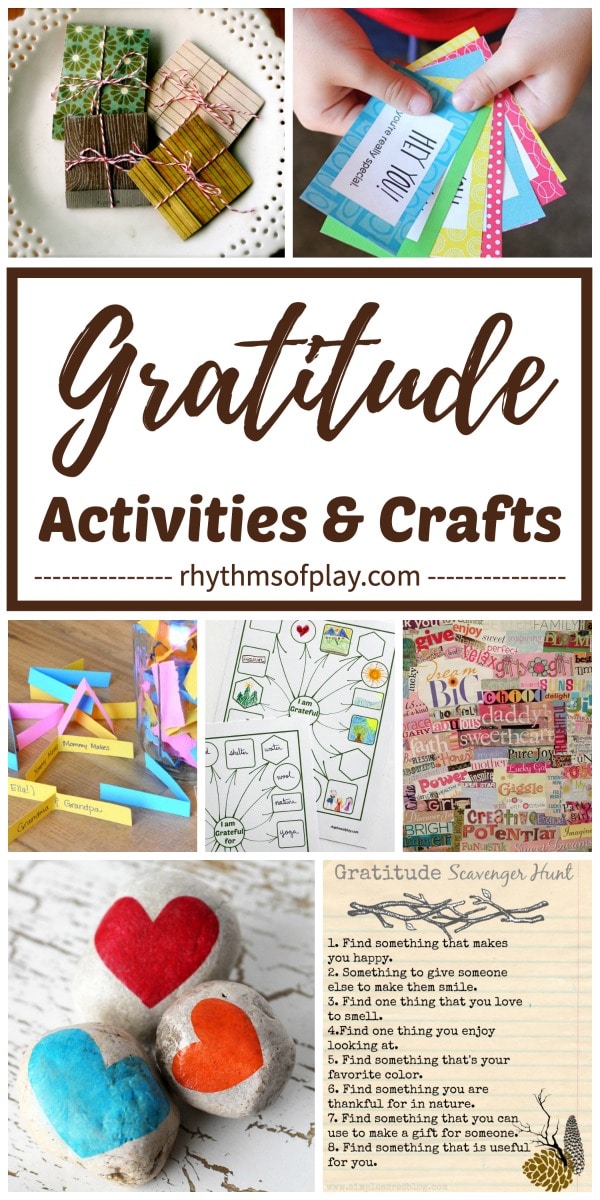
- Invite children to go on a gratitude scavenger hunt! Simple Acres has a free printable for a gratitude scavenger hunt that you can print and share with your children at home or in the classroom. Find the link to download and print HERE.
- Go on a gratitude photo scavenger hunt on Thanksgiving or any other day of the year. Please visit Let’s Get Together to see how they did it!
- Go on a thankful nature walk with children to encourage them to be kind to nature and express gratitude for the great outdoors.
Related: Sensory Bin Nature Scavenger Hunt
6. Pass Out Smile it Forward Kindness Cards:
- Passing out ” Smile It Forward Kindness Cards ” is a simple kindness activity that doubles as a fun gratitude activity for kids.
- Not only are passing out these cards a great way to share kindness, appreciation, and gratitude with anyone who crosses your path.
- Download and print Smile It Forward kindness cards from the Kids Activities Blog.
7. Bake and Share Kindness Cookies:
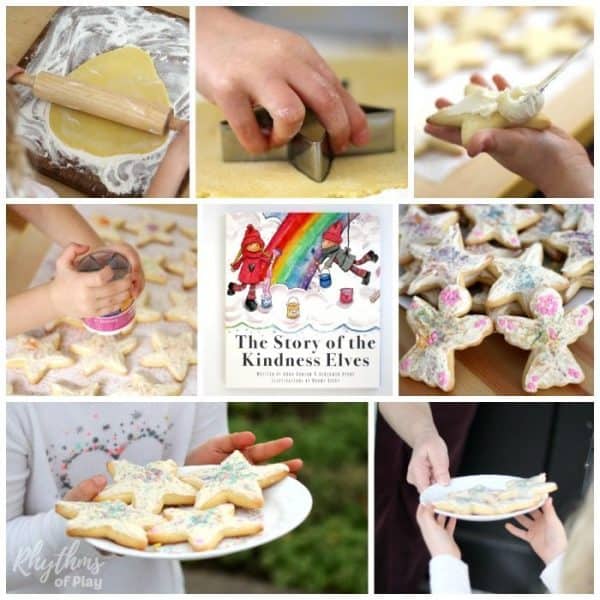
- Baking and sharing kindness cookies is not just about delicious treats; it’s a heartwarming way to spread joy and make meaningful connections with others. Baking cookies together can be a delightful bonding experience for families and friends, creating cherished memories.
- But the real magic lies in sharing these delectable treats with others. Whether surprising a neighbor with a freshly baked batch, offering a warm cookie to a stranger, or sending a care package to service professionals or a friend in need, each act of kindness can brighten someone’s day and create a ripple effect of positivity.
- These small gestures of sweetness and thoughtfulness remind us of the power of simple acts of kindness to bring warmth and happiness into the world. So, let’s bake those scrumptious kindness cookies and spread love and appreciation, one cookie at a time!
8. Conduct a 28-90 Day Gratitude Challenge:
Embarking on a 28 to 90-day gratitude challenge is an exciting and transformative journey that can foster a culture of appreciation at home or in the classroom. Completing a 28 to 90-day gratitude challenge can be a powerful and rewarding experience that can transform attitudes and nurture a sense of gratitude far beyond the challenge’s conclusion.
- Express gratitude daily for 28-90 days (the longer, the better) to make thankfulness and grateful thinking a habit:
- Draw or write in a gratitude journal or coloring page every day.
- Begin a gratitude list of everything you appreciate about yourself, others, work, community, home life, nature, and more. Read this list and add to it daily.
- Share thankful thoughts daily during meals, around the classroom, or before bedtime. (Add these to your daily gratitude list.)
- Use gratitude prompts to add to your gratitude list.
- Read gratitude quotes or a book about gratitude aloud every day.
- Perform an act of kindness for others each day.
- Enjoy a new gratitude craft with the ideas included below.
- Put a leaf on a thankful tree, a note in a blessing Jar, a feather on a thankful turkey, a paper link on a gratitude garland or chain, etc., with something you are grateful for each day for 28 to 90 days.
- Make gratitude a daily habit that extends beyond 90 days to live a grateful life filled with blessings that seem to multiply magically. To do so, continue to read your gratitude list, thankful leaves, and blessing jar entries, and use your favorite gratitude activities, games, and tools.

Benefits of a 90-day thankful challenge:
- Completing a 90-day gratitude challenge helps form the habit of thankfulness, making gratitude more likely to become a lasting part of one’s life and a primary way of relating to the world.
- Gratitude and grateful thinking cultivate an optimistic mindset, improve mental well-being, and reduce stress.
- Participating in a 90-day gratitude challenge strengthens relationships and promotes empathy as participants learn to recognize and appreciate the support and kindness of others.
- A thankful challenge encourages mindfulness and a deeper connection with the present moment, helping children and adults savor the little joys in their lives.
Related: Kindness Cookies
9. Read Children’s Books About Gratitude and Thankfulness:
- Help nurture gratitude in the home or classroom with Children’s Gratitude Books That Inspire Thankfulness.
- Click on the link or the image below to see our favorite gratitude books for kids.

10. Play Gratitude Games at Home or School:
- It’s fun to play games to teach gratitude. Gratitude games can help remind preschoolers, kindergarteners, and kids of all ages of the many things they can choose to be grateful for.
- Try the thankful game ideas on the list in the next section!
6 Gratitude Games for Kids and Adults (Thankful Games):
Learn how to play four different fun gratitude games using the ideas below. These gratitude games for kids are fun to play at home with family or at school with classmates and friends.
1. Gratitude Pick-up Sticks:
- Count your blessings with this homemade version of Pick-up Sticks with a gratitude twist.
- This gratitude game is about expressing gratitude for a specific type of person, place, event, or thing, depending on the color of the pick-up stick you choose.
- Learn how to play the gratitude game on Teach Beside Me.
2. Punch Gratitude Game:
- Turn expressing gratitude into a fun activity for the whole family or classroom with THIS Gratitude Game.
3. M&M Gratitude Candy Game:
- Gather everyone to share what you’re thankful for while enjoying a little treat with THIS fun gratitude candy game for kids!
4. Gratitude Skittles Game:
- The Skittles Gratitude Game is a fun way to get people talking about what they are most thankful for at home or in the classroom.
- Visit Play, Party, Plan to learn how to play this gratitude candy game and download the printable.
5. The ABCs of Gratitude Game:
- Play the Grateful ABC Game! Invite the kids (and grownups, too!) to sit down and think about what they are most thankful for.
- The challenge is to think of at least one thing or person they are grateful for that begins with each letter of the alphabet and write them down on paper.
- Learn more about the ABCs of Gratitude Game on The Keel Deal and how to play the Thankful ABCs on PJs and Paint.
6. Gratitude Dice Game:
- The Gratitude Dice Game is a fun way to remind kids to focus on what is most important to them and how much they have to be thankful for.
- Learn how to play the Thankful Dice Game and download the printable on Mombright.
Related: How to Make a Thankful Tree with Clay Gratitude Leaves
Related: Turkey Leaf Lantern Craft
9 Gratitude Crafts for Kids (Thankful Crafts):
Gratitude crafts and activities provide a simple way for children to learn how to express gratitude. Practicing gratitude is a beautiful way for children to develop an attitude of gratitude for life.
1. How to Make Homemade Gratitude Journals:
- Creating a simple homemade gratitude journal is an easy way to boost feelings of gratitude. Follow the instructions below to make a DIY gratitude journal:
- Transform a blank journal, composition book, or any size and type of notebook with lined or unlined paper into a gratitude journal.
- Write a title on the front or the first page, such as “My Gratitude Journal” or “Thankful Thoughts” if desired.
- Decorate it with meaningful artwork or stickers to make it special, or leave it plain and non-assuming.
- Include gratitude quotes within the pages that you enjoy or speak to you somehow, such as those found within this gratitude activity guide.
- Spend a few moments daily, or at least once a week, writing about the blessings in your life. Use gratitude journal prompts to help get your grateful thoughts rolling.
- Another fun gratitude craft similar to a gratitude journal is a thankful book for toddlers, preschoolers, and kindergarteners, such as THIS one from Mama’s Happy Hive. Help children (especially young children who don’t know how to write yet) with this fun gratitude exercise for kids.
Related: How to Make and Keep a Nature Journal
2. Create Gratitude Stones Crafts:
- Gratitude stones are a simple gratitude craft for preschoolers, kindergarteners, and kids of all ages. Learn how to make Gratitude Stones, similar to the ones found HERE, to cultivate an attitude of gratitude from an early age.
- Another fun idea is to make painted rocks with words of gratitude. Stones painted with thankful words can even be hidden for others to find!
Related: How to Paint Rocks
3. Make a Vision Board or Gratitude Collage:
Making a gratitude (or vision board) is one of my favorite activities and crafts for kids and adults. My daughter has both types of art collages hung side by side in her room, while I have a large bulletin board with each of these elements to inspire thankfulness, create feelings of abundance, and continue to co-create the life of my dreams.
In other words, I recommend making both because a thankful collage and a vision board go together like peas and carrots or peanut butter and jelly. Making a gratitude or vision board is simple. Follow the step-by-step instructions below, and don’t forget to make a gratitude collage for yourself while you’re at it:
How to Make a Gratitude or Vision Board:
- Draw illustrations or collect photos, graphics, and magazine or newspaper clippings of things you are grateful for or would like to have or co-create in your life.
- Choose one of the following methods to hang or glue the drawings and photos:
- Use push-pins to pin or hang drawings and clippings of what you are thankful for (gratitude collage or board) or what you want to bring more of into your life (vision board or collage) to a bulletin board or multiple bulletin boards.
- Make homemade magnets to hang illustrations and photos of things you want (vision board) or are thankful for (gratitude board) on a magnetic whiteboard or refrigerator.
- Glue or tape photos, graphics, and magazine or newspaper clippings of things you are grateful for (thankful collage or board) or would like to co-create more of in your life (vision collage) to a piece of poster board and hang it on a wall or a door.
4. Use a Gratitude Jar, Thankfulness Jar, or Blessing Jar:
- Teaching our kids to be grateful is one of the most important lessons we can share with children. Invite children to count their blessings with a Thankfulness Jar activity.
- Writing prayers and messages of thanks on paper strips and placing them in a gratitude jar is a simple way to help our kids become more grateful.
- Encourage children to write what they are thankful for on paper strips and put them into the Jar.
- Place the gratitude jar on a table or shelf and encourage everyone in the home or classroom to fill it with everything they are grateful for.
- Learn how to make a thankful blessing jar HERE, or purchase one HERE.
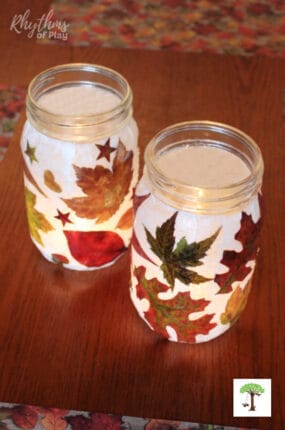
- Or make a DIY leaf lantern, heart luminary, or turkey lantern and use it as a gratitude jar.

5. Make a Gratitude Tree and Thankful Leaves:
- Thankful trees are a fun activity to make during October in Canada and November in the United States, for Thanksgiving. However, many of them can also be used as a fun kids’ gratitude craft activity all year.
- Use a paint pen to write everything you are grateful for on real leaves, as shown in the photograph below, with this easy DIY Thankful Tree.
- Make clay gratitude leaves to decorate your thankful tree with this simple gratitude craft for children and adults.
- Download and print this gorgeous gratitude tree with thankful leaves and use it to express what you are most grateful for. Alternatively, you can draw a simple tree trunk and create a crown of leaves with words of thanks on them.
- For even more Gratitude or Thankful Tree ideas, look at this list of Thankful Trees you can make and use with children at home or in the classroom.
 to write everything you are grateful for on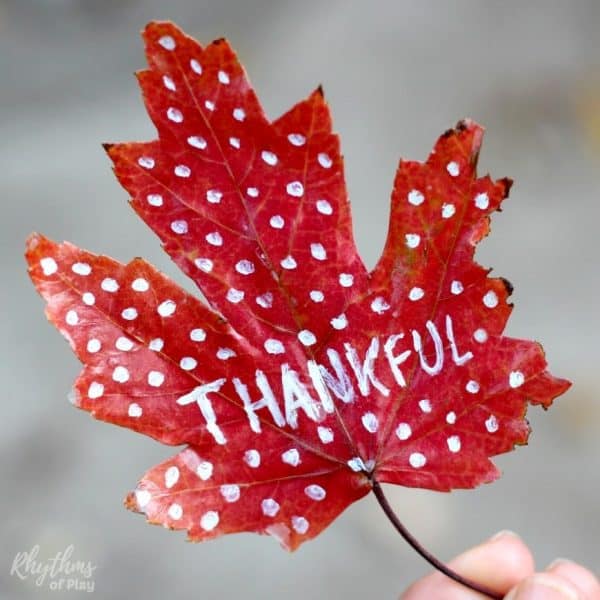
6. Gratitude Sunflower Craft:
- Inspire preschoolers to express gratitude with this fun sunflower-shaped gratitude craft.
- Invite children to use each sunflower petal to represent something they are thankful for.
Related: Growing Sunflowers with Children
7. DIY Gratitude Mobile or Wind Spinners:
- Create a gratitude mobile and hang it somewhere everyone sees daily.
- Or make some thankful wind spinners like THESE by Make and Takes.
8. Create a Simple Gratitude Garland Craft:
- Gratitude Garlands are another excellent way to help children realize everything they have to be thankful for.
- Making a Gratitude Garland Craft is easy. Follow the simple steps below:
- First, cut pieces of construction paper or colored paper, or use THESE pre-cut paper strips.
- Next, ask relatives, friends, co-workers, or students to write what they are grateful for on each piece of paper.
- Finally, loop the strips of paper around each other and glue them end to end to create a gratitude garland paper chain.
- You can also punch a hole into each piece of construction paper and thread it onto a string, ribbon, or yarn to make a thankful garland, as shown HERE.
9. Make a Thankful Turkey or Gratitude Pumpkin Craft:
- Explore Thanksgiving gratitude activities and crafts to discover fun Thanksgiving crafts you can create, such as a gratitude pumpkin craft and several enjoyable thankful turkey crafts, including this printable placemat that you can download, print, and decorate.
Related: The Best Nature Study Supplies for Kids
Thankful Gratitude Activities and Crafts for Kids:
Showing gratitude through simple activities and crafts for kids can foster an attitude of gratitude in the home or classroom. Expressing gratitude and thankfulness has been researched to be associated with increased levels of optimism and empathy. When we are thankful for what we have, we receive more of what we are grateful for. Thus, when we are thankful, we can find greater happiness.
This incredible collection of Thanksgiving gratitude activities and crafts can help parents and educators teach children how to express gratitude for life. If you are looking for fun gratitude activities on and around Thanksgiving, check out the incredible list of traditions and fun things to do for Thanksgiving.
Don’t wait–share your gratitude today! Click on the link to learn more about Rhythms of Play!
More Crafts and Activities for Kids:
- Awesome Autumn Activities for Kids with Printable Fall Bucket List
- Winter Activities for Kids with a Printable Winter Bucket List
- Fun Spring Activities for Kids with Printable Spring Bucket List
- Summer Activities for Kids with Printable Summer Bucket List
- Outdoor Activities for Kids



Pinning, That was a great idea and a lot of inspiration thanks.
Thanks, Boyd! I’m so glad that you found it useful!
With Thanksgiving coming up, it’s important to remind our kids how important it is to stay positive when you build relationships with peers and how rewarding it is to give something you can share. These don’t necessarily need to be things but feelings, such as kindness, honesty, friendship, acceptance, and gratitude.
As a teacher, I plan my whole year around teaching kids life-important skills. Thank you for providing so many great ways to help them learn about gratitude and how to be thankful.
Hi Alicia,
I agree with you one hundred percent! I created this list because I need to stay positive and build relationships around feelings such as gratitude. I’m so glad that you find it useful! Happy Thanksgiving!