
Help children learn to manage anger and understand overwhelming feelings in healthy, more effective ways with this list of the best anger management books for kids, from toddlers to teens.
Here’s a list of anger management books for kids that can help a wide range of children, from toddlers to teens, understand their angry feelings, deal with their overwhelming emotions, and learn indispensable emotional regulation skills that help them calm down. Reading children’s books about anger management can also help kids learn how to cope with these big feelings, develop empathy for others, and appropriately express their basic emotions with healthy words and behaviors.
It’s okay to feel angry, but hurting others with hurtful words or actions is not OK. These books about anger for kids provide effective strategies to help children learn to calm down and self-regulate. Like me, I think you will find the list of children’s books about anger management below to be an indispensable tool for parents, teachers, and caregivers. Use these helpful books to control angry outbursts, manage intense feelings, and find alternative solutions at home, in child care centers, or in the classroom.
First published in July 2015, this excellent booklist for children of all ages is regularly updated and republished to improve the content and remain current. You might also enjoy this list of books that help kids understand their emotions and manage other strong emotions effectively, such as worry or anxiety.
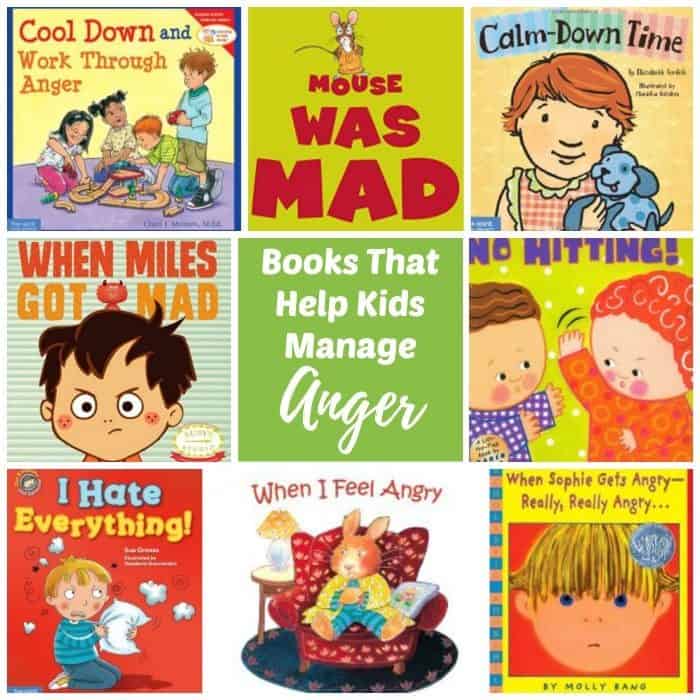
Books That Help Kids Manage Their Angry Feelings and Emotions:
Everybody gets angry sometimes, but anger can be even more upsetting and overwhelming for children who haven’t learned how to deal with these intense feelings and emotions. Reading anger management books to children is a great way to help them learn emotion regulation skills and develop into healthy, emotionally mature adults.
This list of books about angry feelings for children provides a diverse range of concrete coping skills with several helpful anger management options for kids of all ages. You might also enjoy growth mindset books that teach children important life lessons.
Why is Anger Management an Important Social-Emotional Skill for Kids to Learn?
Managing anger with appropriate words and behaviors is essential to a child’s social-emotional health and well-being. As parents, teachers, and caregivers, it is our job to help children understand their feelings so they can learn to manage their anger, build self-control, and ultimately self-regulate. Understanding how to manage anger and deal with angry emotions has many other benefits for children, including fostering emotional intelligence and leading to a happier, more fulfilling life.
Helping Children Manage Anger and Control Angry Impulses:
One of the primary ways children learn to manage their anger and control their angry impulses and self-regulate is by watching and learning from the people they spend the most time with, their parents, teachers, and other caregivers. Another excellent strategy is reading kids’ books about anger to them.
The comprehensive list below features the best children’s books on anger management for kids of all ages. It includes books for toddlers about hitting and throwing temper tantrums, as well as excellent books for teens about controlling angry, emotional outbursts and violent, rage-filled meltdowns.
Calm-Down Self-Regulation Strategies for Kids (and Caregivers):
Each book about anger for kids offers specific self-regulation advice in child-friendly language that kids can easily understand, making it a great addition to every child’s bookshelf. These kids’ anger management books on this list also serve as a reminder for caregivers to manage their own anger in healthy ways.
In other words, they can help parents, teachers, and other caregivers model appropriate behaviors, responses, and reactions to life events. This makes them an indispensable tool for a teacher’s or parent’s library of helpful resources. Modeling appropriate behaviors, responses, and reactions to life events and happenings is a critical life skill we can each learn, develop, and use to help our children learn to regulate themselves.
Building Positive Emotional Regulation Skills can help Everyone Successfully Navigate Negative Emotions:
Building these healthier emotional habits can not only help you avoid the anger trap the next time you feel upset or overwhelmed, but also show your children, grandchildren, or students, and other little people in your life how to practice them. For example, when I get angry, I do my best to show my daughter appropriate ways to manage it. This includes using calm-down tools and techniques such as:
- Taking a deep breath to stop myself from reacting.
- Silently counting down from 10 to 1 to calm myself before responding.
- Doing my best to stay calm and respond in a healthy way.
- i.e., “Is what I have to say: true, kind, and necessary?” (Asking these questions before responding is taught by Kim John Payne, M. Ed., in the Soul of Discipline.)
- Accepting responsibility for the role I played.
- Apologizing when necessary (self and others).
- Sharing my feelings when appropriate.
Anger Happens; Managing It Isn’t a Perfect Behavioral Science
Anger doesn’t go away forever. We are human, after all. But we can learn how to manage our anger better and do our best to provide a healthy example for our children. So, I do my best to avoid regret and find gratitude for the lessons that cross my path. I also do my best to learn from my mistakes and how to improve the next time I miss the mark. In other words, I use my mistakes to teach myself how to be a better parent, teacher, coach, and person every day.
I’m nowhere near perfect. Like every parent (or teacher), I do my best with each new confrontation. It doesn’t matter that I spent several years in graduate school studying child psychology, working on my PhD. Nor does it matter that I have over twenty-five years of experience teaching, coaching, and caring for children and dealing with their basic emotions. I’m not immune to road rage. I get angry sometimes, and I make mistakes, plenty of them. However, the calm-down techniques above and the helpful books below help me keep my emotions in check and model more appropriate ways of responding when confrontations arise.

Best Anger Management Books for Kids From Toddlers to Teens:
Help children learn to manage anger by reading books about anger. The anger management books on this list are for kids of all ages: toddlers, preschoolers, elementary-aged kids, tweens, and teens. These books can help kids understand their feelings, control their anger, and learn to express their emotions in healthy, safe ways. They also teach how to manage both.
Reading these short stories and lessons can help children understand the connection between their emotions and actions. I can’t promise a magical “happily ever after” fairytale ending. However, I can promise that reading children’s books about anger management can give children a new perspective and help them learn to manage explosive anger and intense angry emotions over time.
Especially when you combine reading them with real-world hands-on examples of healthy ways to handle anger and other intense feelings. It’s also a good idea to provide consistent positive discipline with opportunities for heart-to-heart conversations about feelings and emotions, such as depression, and how to manage anger in healthy ways.
You might also enjoy reading kids’ books that teach Important Life Lessons.
How to Find The Best Anger Management Book for Your Needs:
The list or reccomendations starts with children’s books about biting, kicking, and hitting for toddlers and preschoolers. It ends with books about anger and managing violent emotional outbursts for those fiery teens! In other words, if you are looking for anger management books for toddlers and preschoolers. I recommend starting at the top of the list.
If you are searching for anger management books suitable for older elementary school-aged kids, tweens, and teens, scroll to the bottom of this list to find the best options for your needs. That said, sometimes books for toddlers are just as effective for teens because the simple language makes them easier to understand, especially for children with special needs. Read the anger management books that work best for you and the children you care for, whether at home or in the classroom.
Social-Emotional Development Books About Anger Management for Toddlers, Preschoolers, Elementary School-Aged Kids, and Teens:
This post contains Amazon affiliate links to books on anger management for kids to help them learn to manage different types of intense angry feelings effectively. If you click to purchase, Rhythms of Play will earn a small commission at no cost to the consumer. Click the orange hyperlink for product details on each anger management book for children on the list below.
26 Anger Management Books for Toddlers and Preschoolers:
Here’s a list of social-emotional development books to help toddlers and preschoolers calm down, manage their anger, and learn to self-regulate. Scroll down to look at the anger management books for tweens and teens at the bottom of this list if you are looking for anger management books for older children. Since the original publication in September 2016, I regularly update this list of anger management books for kids by adding the latest children’s books recommended by teachers, therapists, and psychologists.
This list of books about anger management is currently divided into several helpful categories. Organizing the list of kids’ anger management books this way makes it much easier to find the one that works best for you, your children, or students, and your family or classroom. Books about anger for toddlers and preschoolers are listed first, those for older elelementary aged kids next, followed by tweens and teens. You might also enjoy Fairy Tales for Children and How They Aid Child Development.
Calm Down Books for Toddlers:
Calm down books for toddlers help young children slow their bodies and minds when they feel overwhelmed. Reading them together encourages toddlers to develop healthy habits for calming down when upset or overwhelmed. Over time, stories like those below foster empathy and help toddlers better manage strong emotions.
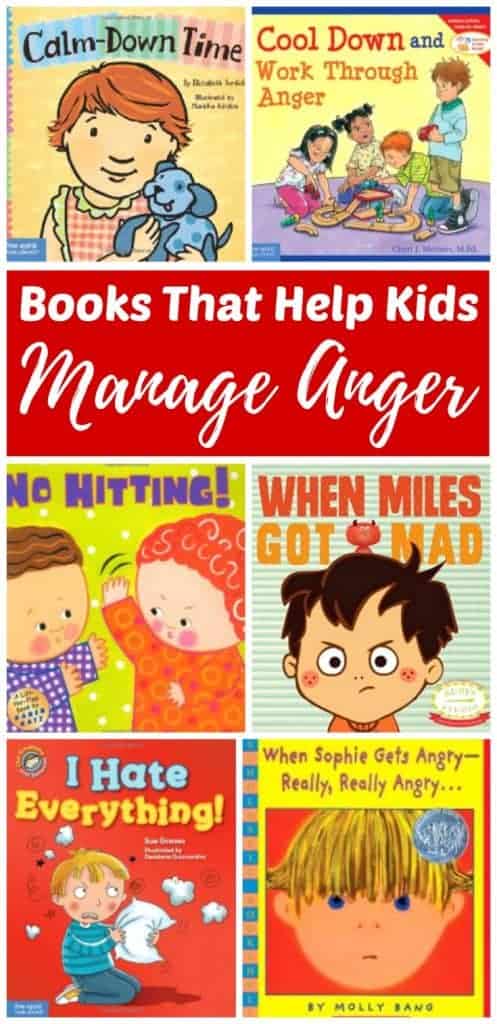
1. Calm-Down Time (ages 1-3) by Elizabeth Verdick:
 (ages 1-3) by Elizabeth Verdick:
The children in our daycare love “Calm-Down Time” by Elizabeth Verdick and always ask me to read it to them. In this must-have addition, young children can see toddlers of different nationalities using simple tools to calm themselves down and learn to self-regulate. In this simple story, children learn to use their calm-down place to regulate their emotions. A calm-down place is a quiet space where children can cry, ask for a hug, sing to themselves, be rocked in a grown-up’s arms, talk about feelings, and breathe: “One, two, three . . . I’m calm as can be. I’m taking care of me.“
2. Words Are Not for Hurting (ages 2-5) or Words Are Not for Hurting (ages 4-7) by Elizabeth Verdick:
 or Words Are Not for Hurting (ages 4-7)
 by Elizabeth Verdick:
Here are a few more of my favorite anger books for kids in my home daycare called “Words are Not for Hurting.” Incredibly, the children enjoy reading these basic behavior books about angry emotions. I find reading these children’s anger books strange, but the toddler-friendly language helps them improve their emotional literacy, so who am I to judge?! “Words Are Not for Hurting” for two-to-five-year-olds is a good book to help toddlers and preschoolers understand the power of words and how to use positive words instead of negative ones, even when expressing negative emotions. At the same time, “Words Are Not for Hurting” for four- to seven-year-olds is better suited to kindergarteners and young elementary school-aged children.
Books for Toddlers About Biting:
Biting books for toddlers help young children understand what biting is and why it is discouraged. They use simple stories with words, images, and real-world situations that lead to biting, such as feeling angry, tired, or overwhelmed, that this age group can easily understand and relate to. Then, they gently guide toddlers toward safer choices, such as using words, walking away, or asking for help. Reading them together provides parents and caregivers with a calm way to set clear boundaries while offering comfort and support.
3. Teeth Are Not for Biting (ages 2 – 3) by :

 (ages 2 – 3) by
 an effective anger management tool for toddlers, preschoolers, and kindergarteners. It lists several reasons children might want to bite someone and suggests positive alternatives to biting. It also contains helpful tips for parents and caregivers to help children
Children’s Board Books About Kicking for Toddlers and Preschoolers:
Kicking books for toddlers and preschoolers help children understand their bodies and big feelings. The book below shows everyday moments when kids feel frustrated or out of control and what to kick. Reading these books together provides parents with helpful boundaries they can uphold at home or at school. They also give children clear rules, such as feet are for walking, not hurting, and what to do instead.
4. Feet Are Not for Kicking  (ages 2-3) by :


“Feet are Not my daycare. With simple kid-friendly words and charming full-color illustrations, this book helps little ones learn to use their feet for fun, but not in anger or frustration. This book about kicking for kids also includes tips for parents and caregivers on helping
Books About Hitting for Toddlers and Preschoolers:
Books about hitting help toddlers and preschoolers understand how to handle strong feelings. The book about hitting for toddlers below, and the other helpful features: simple stories where characters feel mad, sad, or frustrated, as children often do. Instead of hitting, the characters make safer choices, such as using words, asking for help, or taking a break.
Reading these books together offers adults a calm way to discuss that hands are for helping, not hurting. When toddlers repeatedly hear this crucial message through these gentle stories, they can help children build empathy, self-control, and better ways to manage strong emotions before they escalate.
5. Hands Are Not for Hitting (ages 1-4) or Hands Are Not For Hitting (ages 4-7) by :


 by
by Here are two anger-management books by Martine Agassi that can help children stop hitting. The first “Hands are Not for Hitting” book is about hitting for toddlers aged one to four, which is great to have when young children start hitting each other.
The second is a book about hitting for preschoolers and kindergarteners aged 4 to 7, as well as slightly older kids. It’s never too soon for children to learn that violence is not okay, and it’s never too late to teach them how to manage their angry feelings and emotions in appropriate ways.
Reading a hitting book can help children learn to use gentle hands. Hands can do many things, but everyone can use them for good, positive, and loving actions rather than for harmful or malicious ones.
 Related: Gratitude Books for Kids That Inspire Thankfulness
Children’s Books About Hitting, Yelling, and Other Undesirable Behaviors:
No matter their age, it’s not easy to help children with anger issues suddenly control their impulses. For example, telling a kindergartener to stop hitting simply by asking them to promise not to hit is generally ineffective. However, reading one of the kids’ books about hitting, yelling, and other undesirable behaviours below is a much better option. These books clearly illustrate inappropriate ways to manage anger, provide alternative, appropriate options, and techniques to help children improve their anger management skills.
6. No Hitting! A Lift-the-Flap Book (ages 2-5) by Karen Katz:
 (ages 2-5) by Karen Katz:
The title of this storybook, “No Hitting,” by Karen Katz, is a little misleading. Only the first page of this book about anger management addresses hitting. In contrast, the rest of the book addresses other inappropriate negative behaviors kids might engage in when they are mad, angry, or upset. It is a perfect choice to help steer kids toward acceptable positive behaviors to help them deal with their intense feelings and emotions, and away from negative ones.
7. I Am Stronger Than Anger (ages 3-6) Picture Book About Anger Management And Dealing With Emotions by Elizabeth Cole:
 7. I Am Stronger Than Anger (ages 3-6) Picture Book About Anger Management And Dealing With Emotions by Elizabeth Cole:
Are you tired of telling your child not to shout or kick things when they are angry? Then, “I Am Stronger Than Anger,” a book about anger for kids by Elizabeth Cole, offers the perfect solution. When children are angry, they can express their anger through negative actions and other unhealthy behaviors. They might shout, cry, throw things, roll on the floor, or combine these adverse emotional reactions into a massive meltdown. Reading this book to children can help parents and teachers manage their kids’ overwhelming emotions and scary feelings.
8. Voices Are Not For Yelling (ages 1-4, and 4-7) by :
 (ages 1-4, and 4-7) by
 Like the other children’s books in the Best Behavior series by Elizabeth Verdick, these anger-management books use simple words and delightful full-color illustrations to guide children to choose peaceful, positive behaviors. “Voices are Not for Yelling” is available in two versions: a durable board book for baby–preschool children ages one to four and a more in-depth paperback for older children ages four to seven. Each anger book for children includes helpful tips and ideas for parents and caregivers.
These friendly, encouraging books, geared for toddlers, preschoolers, kindergarteners, and primary school-aged children, introduce and reinforce where and when to use an “indoor voice” or an “outdoor voice, along with other helpful concepts to help children stop yelling when it’s inappropriate. Kids, parents, and teachers love reading these award-winning anger management books.
Books That Help Kids Manage Anger:

Books that help kids manage anger show that feeling mad is normal and acceptable. They use simple stories to explain what anger feels like in the body and what helps it pass. Children see characters practice calming tools such as breathing, moving their bodies, or asking for help. Reading these books together opens the door for gentle conversations about feelings. Over time, they can help elementary-school-aged children develop healthy ways to manage anger without harming themselves or others.
9. When I Feel Angry (ages 2-5) by Cornelia Maude Spelman:
 (ages 2-5) by Cornelia Maude Spelman:
“When I Feel Angry” by Cornelia Maude Spelman reminds children and their caregivers that everyone feels angry sometimes. As this little bunny experiences things that make her angry, she also learns ways to deal with her anger. Ways that won’t hurt others. This simple book provides preschool children ages 2 to 5 with effective strategies for managing their anger and other strong feelings.
10. Today I Am Mad (Anger Management Books for Kids Ages 3-5, Self-Regulation Skills Book 1) by Michael Gordon:
Children from toddlers to teens feel emotions such as anger in big, overwhelming, and scary ways. “Today I am Mad” by Michael Gordon is a great story that helps preschoolers ages three to five learn to manage their overwhelming feelings and powerful emotions. This anger book for kids provides ample opportunities to discuss emotions and feelings. Based on self-regulation theory, this story helps to let their feelings out healthily. Reading this children’s book can help children learn to breathe through anger and frustration, to think before acting, and to be more mindful of their angry feelings.
11. I Choose to Calm My Anger: A Colorful Picture Book About Anger Management And Managing Difficult Feelings and Emotions by Elizabeth Estrada (Teacher and Therapist Toolbox: I Choose Ages 3-6):
Does your child get upset easily? “I Choose to Calm My Anger” by Elizabeth Estrada is a story about anger for kids aged three to six (told from a young boy’s point of view), which can help open your child’s mind to what it feels like to be angry, how to deal with angry emotions, and how to be a calmer, happier person. This anger management story for kids is about a boy who doesn’t understand how his angry feelings control his behavior. But like him, they too can learn to change their mindset to deal with life’s setbacks.
12. I Was So Mad (ages 3-7) by :
 (ages 3-7) by
 This anger book by Mercer Mayer offers young children ages three to seven a perfect way to teach them about their angry emotions. “I Was So Mad” shares the story of the Critter family saying no to everything Little Critter wants to do.
 As a result, Little Critter has a grumpy day. Finally, mad at the world, Little Critter announces he will run away. When pals come by and ask him to come and play baseball, our young hero’s mood quickly changes.
 Parents and children will relate to Little Critters’ feelings in this humorous and heartwarming anger management book for kids.
13. The Very Frustrated Monster (ages 3+) by :
 (ages 3+) by
 “Why me?” and “It’s not fair!” are favorite phrases Twitch says in this anger management book for kids ages three and up by Andi Green. Though Twitch tries hard to get everything right in “The Very Frustrated Monster,” he quickly gets upset when things don’t go his way. If you’ve ever had a day when nothing seems to go your way and everything goes wrong, this adventure will tickle your funny bone as it puts life’s little setbacks in perspective. This anger book for kids is a part of “The WorryWoo Monsters Series” of books about emotions for kids. (Click the link to see more books in this helpful series for kids.)
14. I’m Mad (ages 3-8) by :
 (ages 3-8) by
 “I’m Mad” is part of the “Dealing with Feelings” series by Elizabeth Crary that helps young children accept and acknowledge their emotions. Another book in this series, “I’m Furious,” is available directly below. These helpful stories about anger for kids offer children several ways to cope with angry feelings, using the book’s “choose-your-own-ending” format.
15. I’m Furious (ages 3-8) by Elizabeth Crary:
 (ages 3-8) by Elizabeth Crary:
The most popular book in the “Dealing with Feelings” series, “I’m Furious” by Elizabeth Crary, can help children and their caregivers deal with their most intense emotions. In these anger management books for kids, the author provides guidance and suggestions that help parents and children find solutions for frustrating feelings and emotions that work.
More Anger Management Books for Kids:
Reading anger management books for kids helps build self-control, empathy, and safer ways to manage intense emotions and release excess energy, reducing anger issues at home or in the classroom. You might also enjoy these Books About Love Between Parent and Child
16. Everyone Feels Angry Sometimes – An Anger Management Book for Kids that Teaches Essential Steps to Manage Anger & Frustration (A Psychologist Recommended Book for Children Ages 3-10):
Anger can erupt like lava if we let it bubble inside us, but there are helpful tools and strategies we can use to manage these angry feelings. This best-selling self-help book for children by Dr. Daniela Owen teaches kids about the four levels of anger. “Everyone Feels Angry Sometimes” teaches mindfulness for kids and how to prevent a little spot of anger or frustration from escalating into a full-blown tantrum.
17. Roaring Mad Riley: An Anger Management Story for Kids by Allison Szczecinski M.Ed. (a story about anger management for kids ages 5-7):
There’s no need to roar like a dinosaur! Instead, learn easy ways to stop being angry with a bit of help from some super-friendly dinosaurs. “Roaring Mad Riley” is a story about anger management for kids aged five to seven by Allison Szczecinski, M.Ed. This simple picture and activity book (available in paperback, hardcover, audiobook, or Kindle) makes it fun to learn how to pause and cool down, even when you’re super upset.
18. Angry Ninja: A Children’s Book About Fighting and Managing Anger (Ninja Life Hacks):
Does your child experience anger and not know how to respond to it? “Angry Ninja” by Mary Nhin is a book in the Ninja Life Hacks: Emotions and Feelings book series. It can help kids learn and develop coping mechanisms to manage their BIG emotions. These simple techniques can lead to a calmer mind and body for those tumultuous teens. In this story, we learn that Angry Ninja gets upset a lot. Like a ticking time bomb, Angry Ninja becomes frustrated when their sister borrows things without asking. But then, one day, a buddy shares a simple strategy to help the Angry Ninja control BIG emotions.
Books About Anger for Preschoolers and Older Elementary-School-Aged Kids:
Here are a few more anger management books for preschoolers and older children:
19. Mouse Was Mad (ages 4-7) by :
 by
by “Mouse Was Mad” by Linda Urban is an excellent book for toddlers and preschoolers about dealing with angry feelings. When a mouse gets mad, he tries various ways to deal with his anger, but nothing works for him. Finally, when he becomes still and quiet, he realizes he isn’t mad any longer and discovers his way might be the best of all.
20. When Miles Got Mad (ages 4-7) by :
 (ages 4-7) by
 “When Miles Got Mad” by Sam Kurtzman-Counter is the story of a little boy who gets mad when his little brother breaks his favorite toy. Like Miles in this story, all toddlers and preschoolers must learn to express emotions in healthy, more appropriate ways. This fun book comforts young children who struggle daily to regulate their emotions and provides solutions that can help.
21. When Sophie Gets Angry-Really, Really Angry… (ages 4-8) by Molly Bang:
This anger-management book for kids is a favorite in our house. When I cared for other people’s children in my home, “When Sophie Gets Angry–Really, Really Angry…” by Molly Bang was almost always read to the children in my care. One day, Sophie gets really, really, angry… In the story, we see how she manages her anger healthily after an incident with her sister. This excellent book about emotions for 4-year-olds is a must-read in our home!
 Related: How to Raise a Helper
22. I Hate Everything! A Book About Feeling Angry (ages 4-8) by :
 (ages 4-8) by
 Sam has a hard time when things don’t go his way and cries, “I hate everything!” With his aunt’s help, Sam learns new ways to manage his anger and feel better. This anger management book for children by Sue Graves is part of another book series about emotions. It uses illustrated stories to help kids understand how their feelings and actions relate to one another and how they can learn to manage both. At the end of each book, a two-page series of pictures invites kids to tell a story in their own words. Click through to find more books in the series.
23. Mad Isn’t Bad: A Child’s Book about Anger (ages 4+) by :
 (ages 4+) by
 but does not provide many helpful solutions for children. With that said, I liked how this book touched on forgiving yourself and others. However, a chapter references God and how good Christians should behave, which
Anger Books For Kids:

Update 2026: Now that my daughter is a teenager, I can honestly say that reading anger management books like those included in this helpful guide (and other books about feelings and emotions for kids) has helped her navigate the mind field of emotions throughout her toddler years, childhood, and now into her teen years. Today, she is highly successful at expressing her feelings appropriately and learning from her experiences when she misses the mark, and I am so very proud of her.
Her healthy relationship with herself and others, especially during her teenage years, provides all the proof I need. She’s not a perfect angel, but the skills we learned together make the bumpy times as mother and daughter, as well as homeschool teacher and student, much easier for us both to navigate. I can’t recommend having a few of these books in your library highly enough. Here are a few more helpful resources:
24. Angry Octopus: An Anger Management Story Introducing Active progressive muscular relaxation and Deep Breathing for Kids (ages 4+) by Lori Lite:
“Angry Octopus” is an anger book by Lori Lite that does an excellent job of guiding children (and adults) through a progressive relaxation exercise that helps convey the idea that angry feelings can be managed. Children can relate to the angry octopus in this story as the sea child shows him how to take a deep breath, calm down, and manage his anger. It is clear, and the illustrations are inviting and helpful.
25. Cool Down and Work Through Anger (ages 4-8) by Cheri J. Meiners, M.Ed.:
 (ages 4-8) by Cheri J. Meiners, M.Ed.:
This book shows kids that it’s normal to get angry. “Cool Down and Work Through Anger” by Cheri J. Meiners, M.ED. begins with a few scenarios that might make a kid angry, such as being left out of a playgroup or being treated disrespectfully. Next, it discusses the physical sensations of anger: a hot face, tense muscles, and a fast heartbeat. Finally, it discusses what you might want to do if you get angry, but then explains that these are not always the best choices. Finally, it offers children helpful advice on what to do when they are angry.
26. I Am so Angry, I Could Scream: Helping Children Deal with Anger (ages 5+) by :
 (ages 5+) by
 This children’s story about anger introduces kids to healthy ways to express it. In “I Am So Angry, I Could Scream” by Laura Fox, Young readers are shown how to keep an anger chart to identify the causes of their anger and find positive ways to work through these intense emotions.
Related: Caring for the Earth: 12 Ways to Help Kids Get It
7 Anger Management Books and Workbooks for Elementary School-Aged Kids and Teens:
Take control of anger. Help children learn to manage their anger and emotional outbursts with the fantastic anger management books and workbooks for older kids and teens below. You might also enjoy this list of self-regulation strategies for kids.
1. Anger Management Workbook for Kids: 50 Fun Activities to Help Children Stay Calm and Make Better Choices When They Feel Mad (Health and Wellness Workbooks for Kids Age 5-10) by Samantha Snowden, M.A.:
Here’s a workbook about anger management for kids by Samanta Snowden, M.A., that can help children and teens stay calm and make better choices when angry feelings erupt. Anger is a normal emotion, like joy, sadness, and fear, but knowing how to express anger can be challenging. This insightful “Anger Management Workbook for Kids” has 50 playful exercises to help you handle powerful emotions.
2. Anger Management Skills Workbook for Kids: 40 Awesome Activities to Help Children Calm Down, Cope, and Regain Control (Ages 5-10) by Amanda Robinson, LPC, RPT:
While some children instinctively know how to regulate their emotions, others lack the skills to express their anger more appropriately. This warm, engaging workbook by Amanda Robinson, LPC, RPT, can help children ages 5-10 develop strong skills for managing their anger through 40 fun activities. With the activities in the “Anger Management Skills Workbook for Kids,” children can learn to identify their feelings and practice healthy coping skills to feel calm and in control when angry feelings arise. A bonus section at the end of each chapter encourages kids and their families to practice the skills they’ve learned for even greater emotional mastery and success.
3. I’m Not Bad, I’m Just Mad: A Workbook to Help Kids Control Their Anger (ages 6-12) by :
 (ages 6-12) by
 problem-solving, and communication tips for defusing conflict before it escalates. This anger management book for older children and teens offers clear explanations to help kids understand where their anger may be coming from. It also provides helpful exercises that help children take greater control and ownership of
4. Seeing Red: An Anger Management and Anti-Bullying Curriculum Guide for Kids (ages 7+) by
 (ages 7+) by
 Here’s a unique, proven approach to anger management for elementary and middle-school-aged children delivered in an easy-to-use guide for small groups. Anger is a natural human emotion, but its effects can be devastating if not managed correctly. “Seeing Red” by Jennifer Simmonds is a self-help guide and curriculum designed to help elementary- and middle-school-aged students better understand their anger, make healthy, successful choices, and build strong relationships. 
5. A Volcano in My Tummy: Helping Children to Handle Anger (ages 7+) by :


 (ages 7+) by
 anger constructively. This simple anger-management guide includesto help kids learn to manage their anger. It may not be the best book for you if you are a parent with no desire to work with these lesson plans
6. How to Take the Grrrr Out of Anger (ages 8-13) by Elizabeth Verdick:
 (ages 8-13) by Elizabeth Verdick:
One of the co-authors of this anger book for kids, “How to Take the Grrrr Out of Anger,” is the author who wrote the first four books for toddlers listed at the top of this post. In it, Elizabeth Verdick and her co-author Marjorie Lizoviski teach kids aged eight and up how to recognize anger in themselves and others, handle situations and emotions, and manage the anger they feel. Read this children’s book about anger to help kids learn that violence is unacceptable and that there are safer, more positive ways to resolve conflicts.
7. What to do When Your Temper Flares: A Kid’s Guide to Overcoming Problems with Anger (Ages 8+) By Dawn Huebner:
“What to Do. The author lets children know she understands what they are thinking, but that it is not an excuse to let anger
The Best Children’s Books About Anger Management:
Anger management skills are essential to a child’s social-emotional health and development. It’s never too early for children to recognize the feeling of anger rising from within, learn to manage big emotions, and express anger more appropriately.
Reading anger management books like those on the list above is an excellent therapy technique to help kids adapt to the anxieties and upsets life brings as they learn to understand their feelings and build skills for appropriately coping with emotions such as anger. It’s okay to feel angry, but not to hurt anyone with actions or words.
There are books on this list for kids of all ages: toddlers, preschoolers, elementary-aged kids, tweens, and teens. Read the simple stories and do the activities to help children manage their anger more appropriately and learn to self-regulate.
You may also like Social-Emotional Development Games for kids and the book ideas listed below:
- Children’s Books about Feelings and Emotions
- Books That Teach Kids Important Life Lessons
- Books That Help Kids Develop Healthy Personal Boundaries
- 10 Books Every Parent of Young Children Should Read
How does reading books about anger management help kids?
Reading anger management books aloud to kids is an easy way to help them understand their feelings, build on their anger management skills, and learn basic calming and self-regulation strategies. Reading books about feelings, emotions, and anger management can not only help children understand the root causes of anger but also teach them how to cope with angry feelings and other big emotions so they don’t explode in rage at the slightest provocation.
Thus, reading anger management books aloud to toddlers, preschoolers, and kindergarteners is a valuable resource for helping them learn to manage their anger appropriately. The books about anger for kids on the list below offer helpful techniques that parents and educators can use to help children tame angry outbursts and remain calm even when upset.
Reading Books About Anger Management to Kids is an Effective Social-Emotional Learning Strategy:
As a childcare worker and parent, I’ve noticed that reading anger management books to children can help them learn to self-regulate, a crucial milestone in their social-emotional development. Reading books about anger to kids can also strengthen their emotional intelligence and help them develop a compassionate heart.
I have witnessed the many benefits that reading kids’ books about anger management has on children’s social-emotional health. Anger management books can help children calm down and cope with angry feelings. Reading anger management books will help children understand those feelings, manage their anger, self-regulate, and express their emotions in safer, healthier ways.
Thus, reading anger management books can help kids learn to cope with powerful emotions, such as anger, frustration, and shame, and to adapt and mature into healthy, emotionally intelligent adults. So, why not give reading to your children a try? Another great way to help children manage overwhelming emotions, such as anger, is to play simple social-emotional games.
Reading Books About Anger Management is a Great Calm-Down Tool and Self-Regulation Strategy for Kids:
One of my favorite child-rearing tools and parenting hacks is reading anger management books for children. And I continue to witness the positive effects of reading these books aloud on the children in my care’s social-emotional development. Help your children learn to understand emotions, manage anger, and more with Children’s Books about Feelings, and with the books included in this informative guide to children’s anger management.
More Calming Activities for Kids:
Our family also likes to use other calming and mindfulness practices to help increase the peace in our home. A few more mindful activities for kids and families are listed below.
- Social-emotional development games
- The calming effects of nature with outdoor activities
- Calm down bottles
- The practice of yoga and meditation for kids
 with
with We hope you enjoyed this list of anger management books for kids. You can learn more about Rhythms of Play HERE!



Anger is such a big emotion and sometimes it gets the better of all of us. What a great round up of resources. Thanks so much for sharing!
Yes it is a big emotion, especially for our little one’s experiencing it for the first time. Glad you like it 🙂
Great list, Nell! Thanks for putting them all in one place!
Anger is something that has been unintentionally taught and passed down in my family. I really want to put an end to that trend. Going to look into these books, thanks. My 18-month-old really needs the no biting one 😉
I have found that reading these books has really helped my daughter deal with her anger in appropriate ways, and they also help me help her. They are invaluable to us.
Hello Nell, I love the list! How can I buy them?
So glad you like the list, Derya. I have provided Amazon Affiliate links to each book listed. Just click on the link or title of the text you would like to purchase, and I will receive a small commission at no extra cost.
Dear Nell,
I was so happy to find a curated list with resources for anger management for kids. I think my children’s book “How to save the dragon” would be a valuable addition to the list of reviews you provide to your audience.
Warm regards,
Madalina
I’m so glad that you like this list Madeleine… Your book sounds wonderful! If you would like me to consider it to add to this list I would only ask that you send me a copy for review. You can use the contact form above to request my address, or you can email me directly nell@rhythmsofplay (dot) com.
Nell
Thank you. These books are really such an insight into anger issues and solutions. How can I order some of them.
Thank you.
Suriya
Hi Suriya,
I’m so glad you appreciate this list and want to purchase them for your children and their ability to manage anger and other strong emotions. I have provided Amazon Affiliate links to each book listed. Click on the blue hyperlinked text, and I will earn a small commission at no cost to you if you purchase.
The Tree Monkeys by Wynne Marshall is a story about unbridled anger and selfishness, and the resulting consequences – often life-changing.